











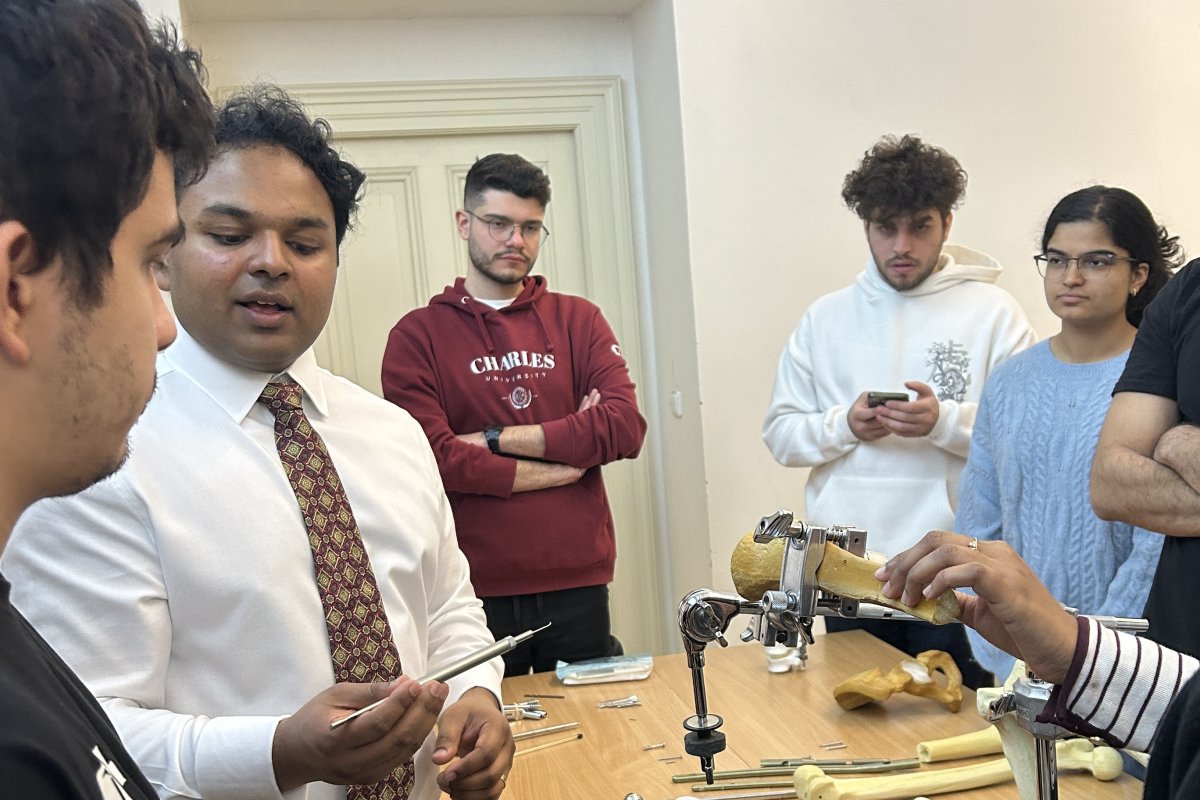
An educational event combining hands-on workshops and academic seminars was recently organised by Academic Affairs, MedSoc and led by Dr. Rhody David Raj. The programme brought together medical students for a full day of learning focused on trauma, surgical exam preparation, and clinical audit skills. Dr. Rhody, a Trauma and Orthopaedic Surgery registrar at John Radcliffe Hospital and LF1 alumnus (Class of 2020), led the sessions alongside MedSoc representatives. In this interview, Darsh Jhala, one of the student organisers, reflects on the planning, execution, and outcomes of the event.
How were the trauma workshops structured, and what did participants gain from working with real tools, kits, and hands-on fracture fixation training?
The workshops aimed to cast a wide net on the topic of trauma and went into detail on 1 fracture by the end of the day. This was reflected in the topics chosen – 1. Basic in Fracture Fixation; 2. Plaster Casting; 3. Ankle Fracture Fixation. Dr. Rhody had brought with himself the tools, kits and models for the workshops and we worked with them to gain an understanding of the treatment. Each workshop began with a short lecture introducing us to the topic and the kits we would be using and proceeded to demonstrate and give us an opportunity to apply our knowledge.
How did the seminars support students in preparing for the Surgery State Exam and understanding audit work in NHS hospitals?
The seminars were independently focused on Trauma questions for the Surgery State Exam and creation of an Audit report in NHS hospitals. Dr. Rhody, an LF1 graduate and an experienced Doctor in the specialty gave valuable information on how to tackle the questions and boosted our knowledge to help us secure a better grade. Likewise, for the Audit seminar, he gave us meticulous information on how to choose a topic for an Audit and how to present it.
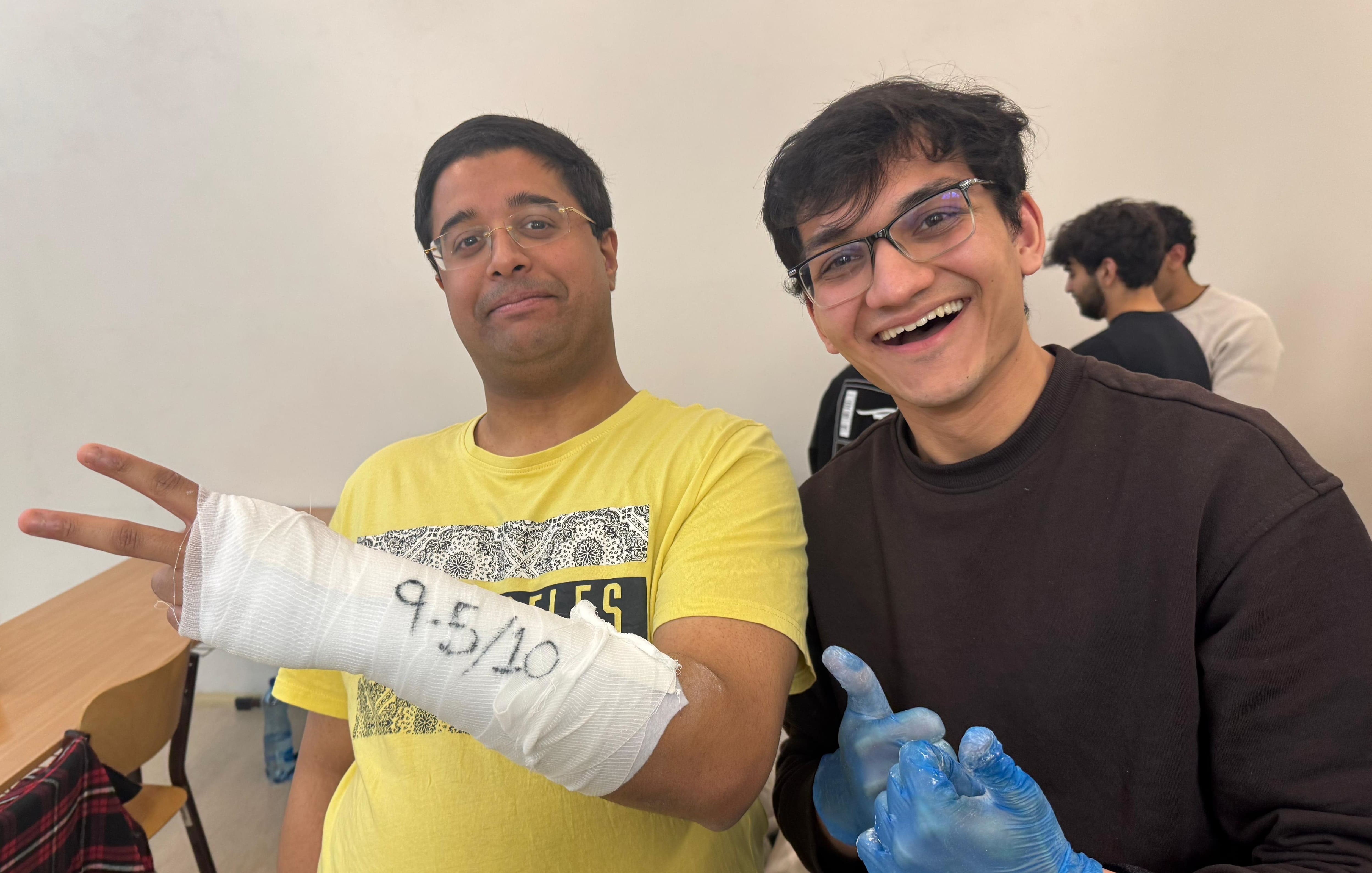
“Apart from the expected exhaustion at the end of the day, morale and interest in the event were maintained throughout the day,” says Darsh Jhala, one of the student organisers (right, with Allen Jacob Alex). Foto: MedSoc
How did you manage participant engagement and scheduling during the full-day event, and what was the overall response to the program format?
Each Workshop was charged 125 Kč and each seminar was free. Although sold individually, we saw that majority of participants signed up for the entire day. Apart from the expected exhaustion at the end of the day, morale and interest in the event were maintained throughout the day due to the topics and the good distribution of schedule. We struggled to stick to the schedule for the day, however we covered all the activities that were planned and advertised.
mal