











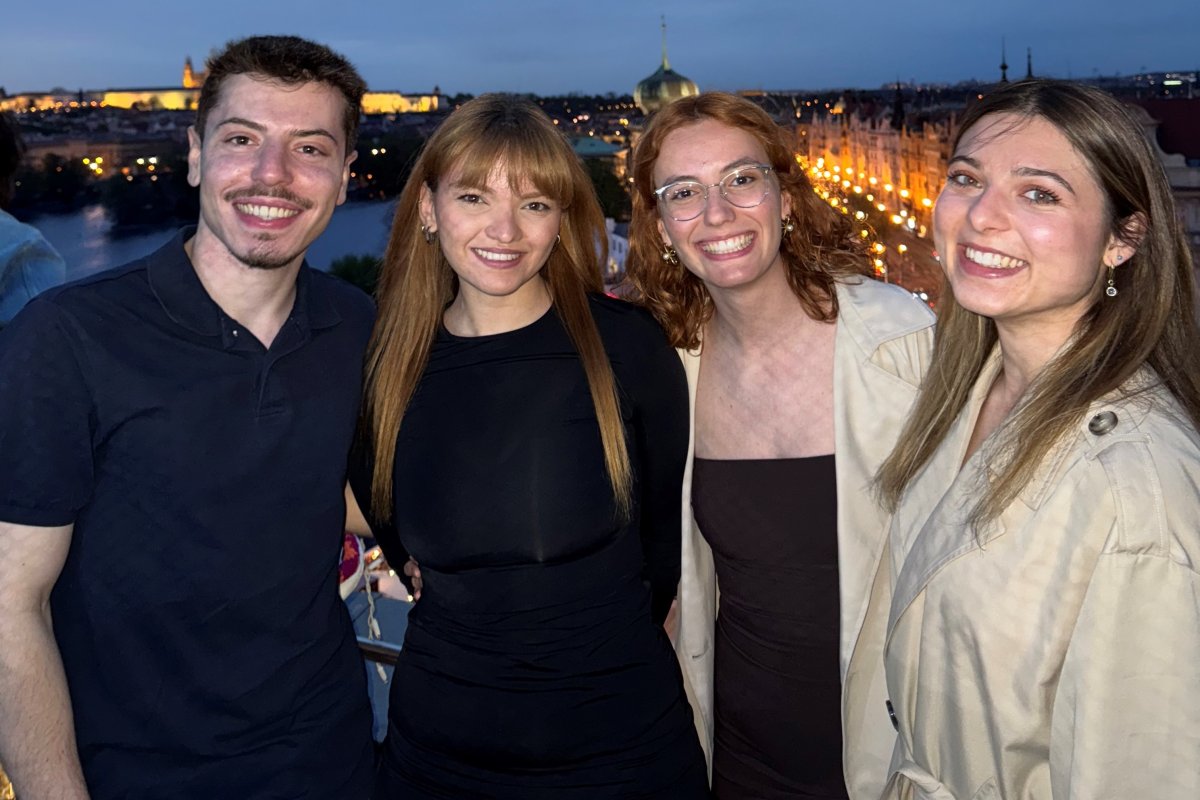
From March 31 to April 11, 2025, as a group of medical students from Greece, we had the opportunity to participate in a clinical internship at general practitioners’ offices in Prague. Our aim was not only to improve our clinical skills but also to understand how primary care functions in a different country and to gain insight into the daily reality of a general practitioner’s work.
From the very first day, we were impressed by the organization of the practices we visited. Everywhere we went, we encountered a welcoming atmosphere and a well-functioning system. The workday had a clear structure: the initial contact with the patient was provided by the nurse, who identified the patient, prepared medical documentation, took blood samples or performed other examinations if indicated by the physician, and checked the timing of preventive check-ups and vaccinations.
The physicians who guided us placed great emphasis on a humane approach – especially empathy, active listening, and maintaining eye contact during conversations with patients. Over time, we came to realize how essential a well-organized system of care is – it reduces stress for both patients and staff, shortens waiting times, and improves the overall efficiency of the practice.
During the internship, we were able to actively participate in patient care. We encountered a wide range of situations – from routine preventive check-ups and acute infections to the management of chronic conditions. We were involved in physical examinations and were encouraged by our mentors to contribute to diagnostic reasoning, propose differential diagnoses, and consider appropriate therapy, including medication choices and dosing. This approach was extremely stimulating for us and helped us begin to think more “practically.”
We also became familiar with the administrative aspects of running a medical practice – we learned how the Czech healthcare system works, how appointments are scheduled, and what the practices are regarding health insurance and medication reimbursement. This allowed us to compare these procedures with the systems in Greece and Cyprus, giving us a fresh perspective on healthcare systems as a whole.
What are we taking away from this internship? Above all, a deeper understanding of the role of a general practitioner – not only as a diagnostician and therapist but also as a guide for the patient within the healthcare system. We improved our clinical reasoning, broadened our knowledge of conditions such as arterial hypertension, diabetes mellitus, and respiratory infections, and gained greater confidence in the field of preventive medicine. We understood that prevention – including vaccinations, screenings, and patient education – is one of the cornerstones of good practice.
In conclusion, we can say only one thing: this experience was immensely valuable and inspiring. We are grateful for the opportunity to work alongside experienced and supportive physicians and to acquire practical skills that we will carry forward into our future studies and medical careers.
Thank you for this unforgettable experience.
Takis Panayiotou, Maria Manousaridou, Foteini Manataki,
Soteroula Yiannacou,
University of Crete, Medical School