











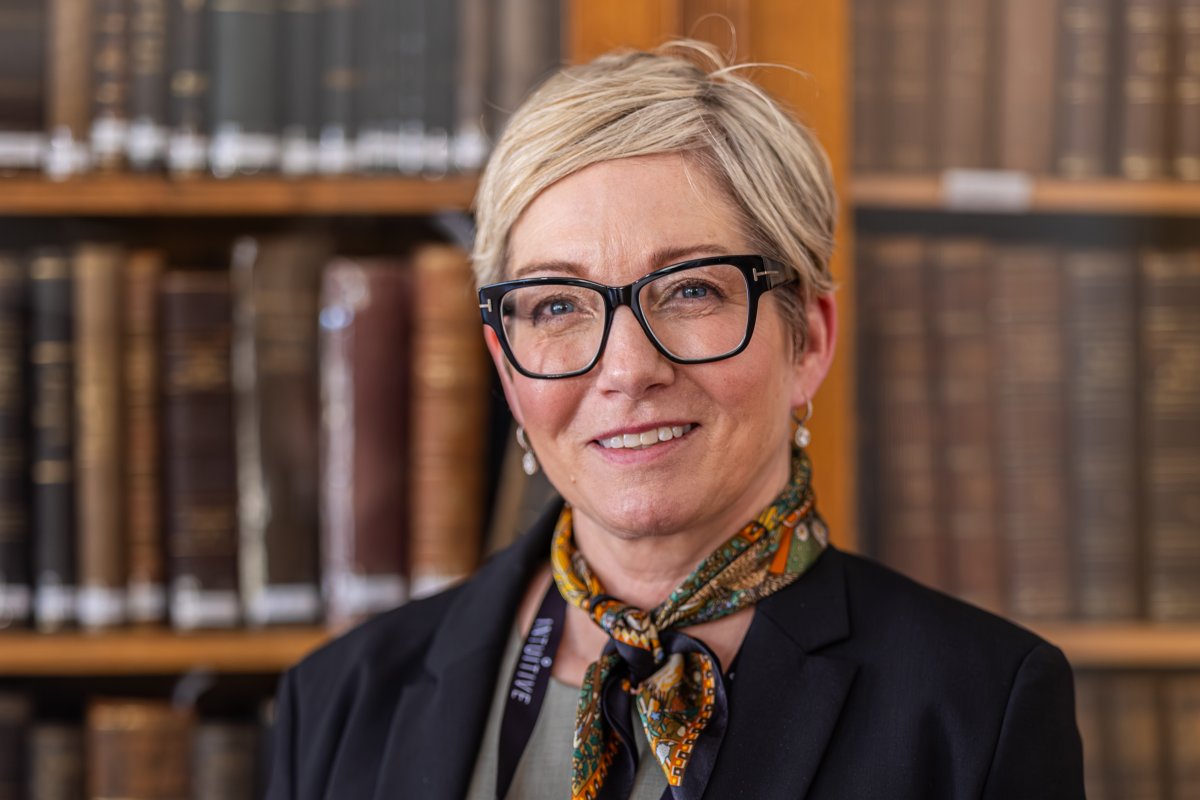
Just minutes before the official opening of the Charles University Training Centre Prague at the First Faculty of Medicine, we spoke with Shelley Petersen from Intuitive about the role of academic training centres, the future of robotic surgery, and why making high-quality education more accessible is essential for expanding minimally invasive care across Central and Eastern Europe.
Have you already had a chance to see the training centre?
Yes. I first visited in February, when the centre was still being prepared. At that time, we were able to see how the training centre and simulation facilities were going to be set up, including the instruments, models, and everything that supports our educational programmes.
What are your impressions of the centre?
It is very well organised. What is particularly important to us is partnering with academic training centres, because their vision closely aligns with ours, particularly our shared commitment to improving patient care. So, this is a very good place to be.
This training centre is based at a university. Is that the usual model, or where do surgeons typically receive robotic surgery training?
We have more than 60 training centres around the world. Some are what we call third-party sites, which are typically academic institutions like this one. We also operate corporate training centres, where we provide education on the technology and introduce participants to Intuitive as a company. Visitors may tour our manufacturing facilities, meet members of our leadership team, and gain a broader understanding of how we work. However, much of the clinical training takes place at academic institutions.
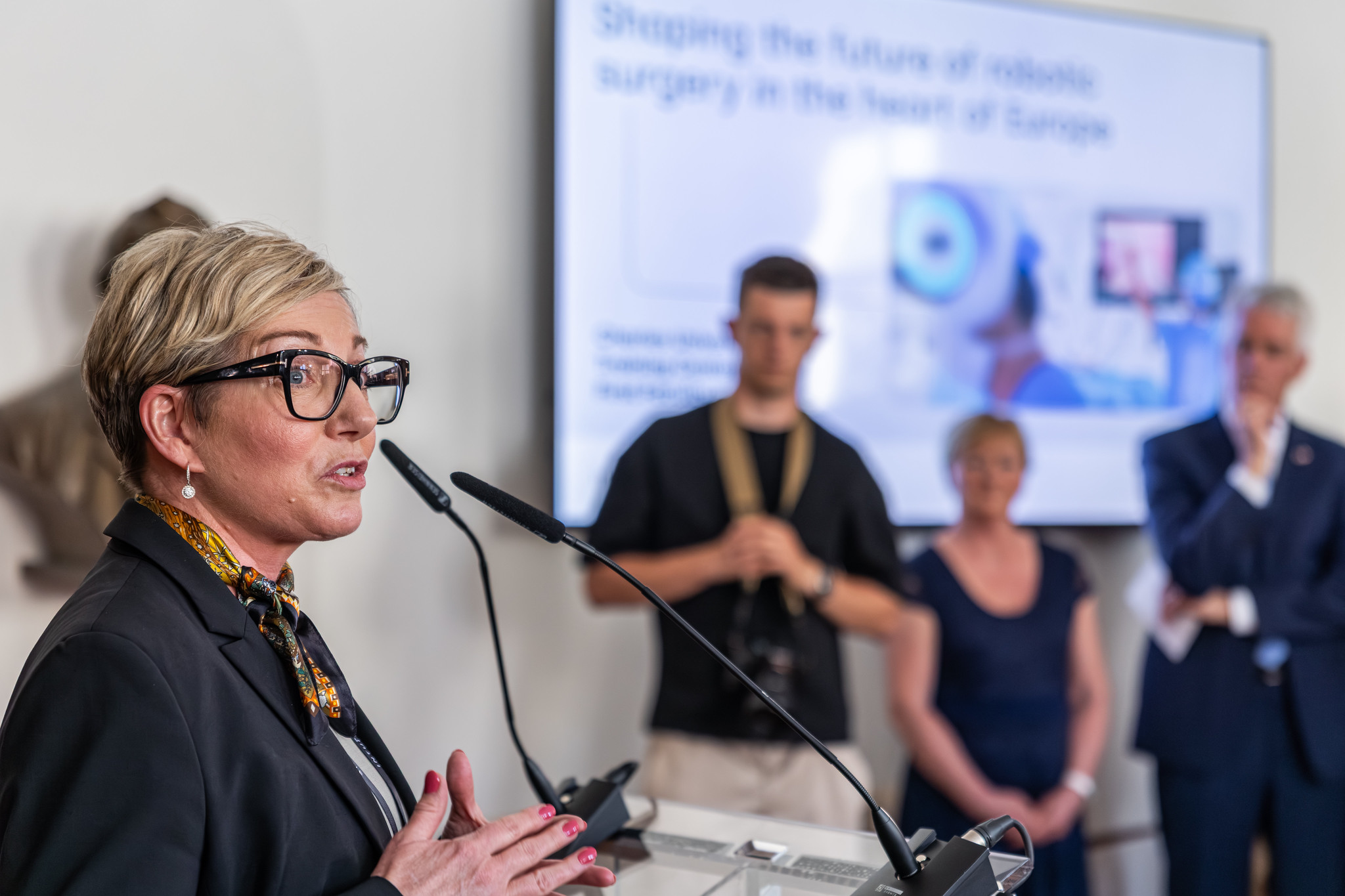
Do hospitals, for example in the United States, also have similar training facilities?
Yes. Many hospitals, particularly those with robotics and laparoscopy programmes, have their own training centres where residents and fellows develop their surgical skills. Those programmes complement the education we provide through our training centres.
Who will teach at the Prague training centre? Will the instructors come from the university, Intuitive, or both?
There are two components. The first is technology training, which focuses on the robotic system itself—how to operate the controls, move the robotic arms and use the platform effectively. That training is delivered by Intuitive employees who complete a structured instructor programme.
The second component is clinical training. Faculty members and experienced surgeons teach the clinical application of the technology, including anatomy, surgical techniques, and procedural skills. This is often delivered through a peer-to-peer model, with physicians teaching other physicians.
Until now, was the nearest comparable training centre in Vienna?
I'm not entirely sure whether Vienna is the closest. We also have a large training centre in Amsterdam, as well as a corporate training centre in Freiburg, Germany. Aside from Vienna, I'm not certain which third party centre is closest to Prague.
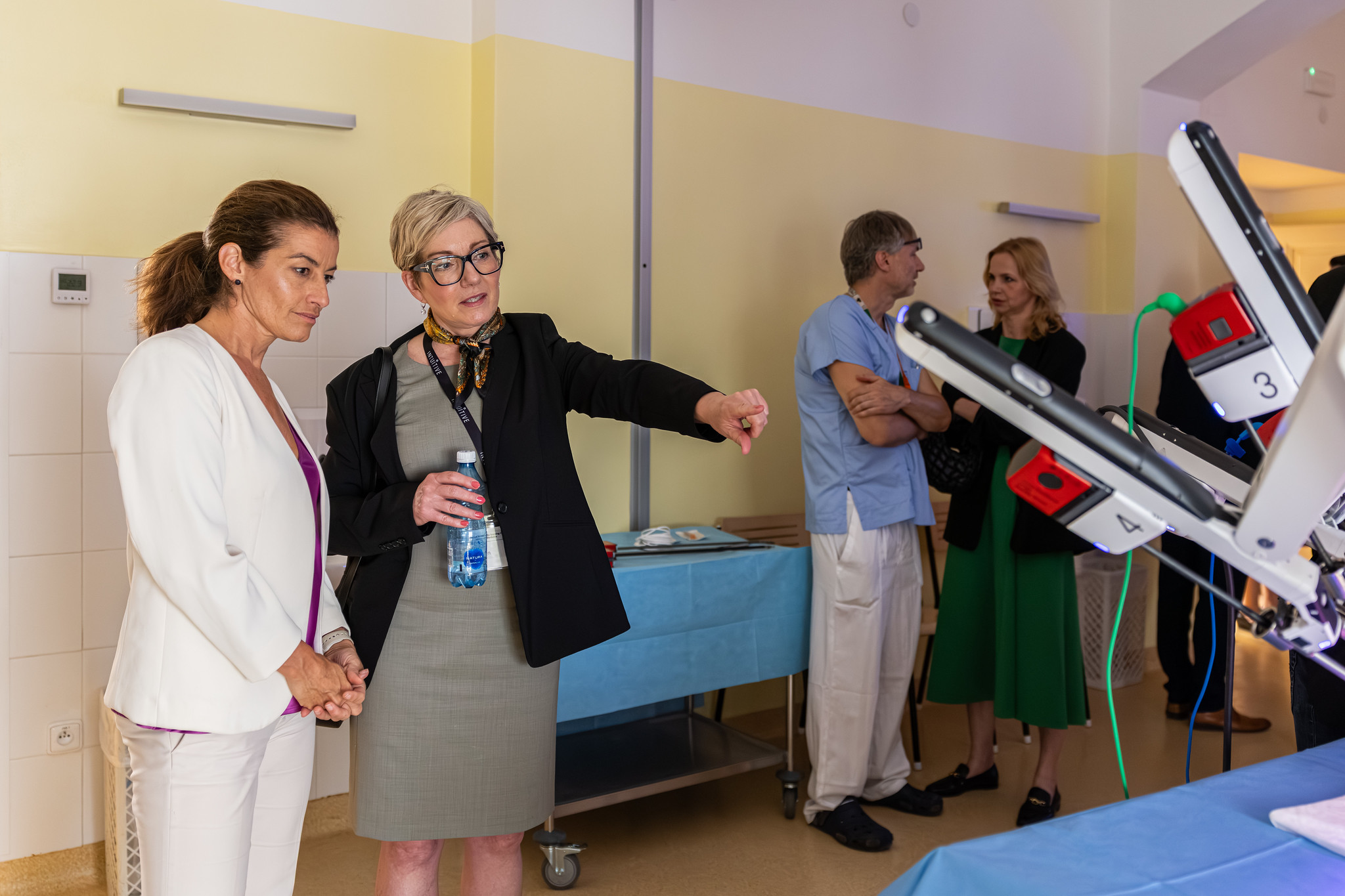
Do you expect this new centre to accelerate the adoption of robotic surgery across Central Europe?
Absolutely. As hospitals continue to move towards minimally invasive surgery, interest in robotic technology is growing. One of the main goals of this training centre is to make education more accessible for physicians and surgical teams across Central and Eastern Europe. Until now, many had to travel to Germany, Austria, France, or the UK for training. Bringing training closer should make it easier for more teams to adopt minimally invasive techniques.
Robotic systems are certainly not available in every hospital in the Czech Republic—far from it. Do you think robotic surgery will eventually become standard practice? How long might that take?
It's difficult to say. In the United States, roughly half of surgeries are now performed robotically. Adoption depends on physicians' willingness to embrace the technology and on hospitals recognising how it can improve patient outcomes and increase efficiency. It will take time.
Is the demand continuing to grow?
Yes, definitely. Interest continues to grow. Our primary goal is to support the responsible adoption of minimally invasive technologies through high-quality education and training for physicians, ultimately improving patient care.
Lukáš Malý